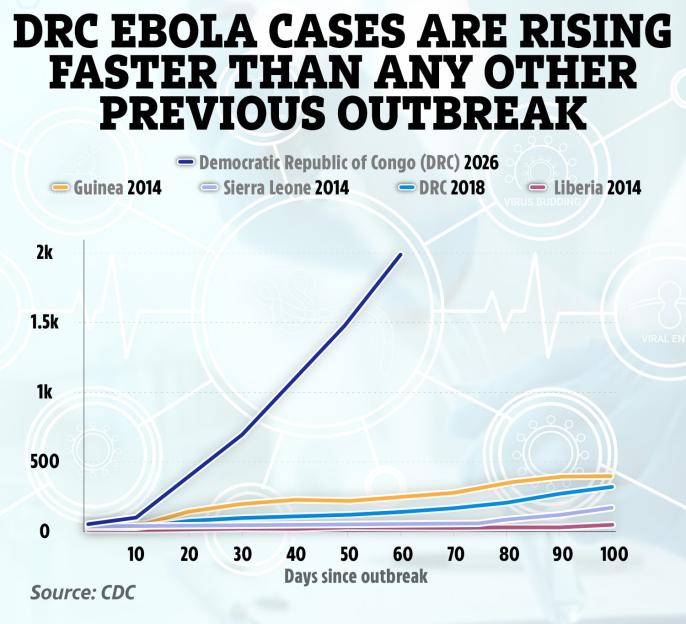
THE strain behind the deadly Ebola outbreak rapidly spreading across the Democratic Republic of Congo is feared to be mutating.
More than 4,000 infections have been confirmed by officials, along with 1,850 deaths – in what’s been described as the of the disease on record.

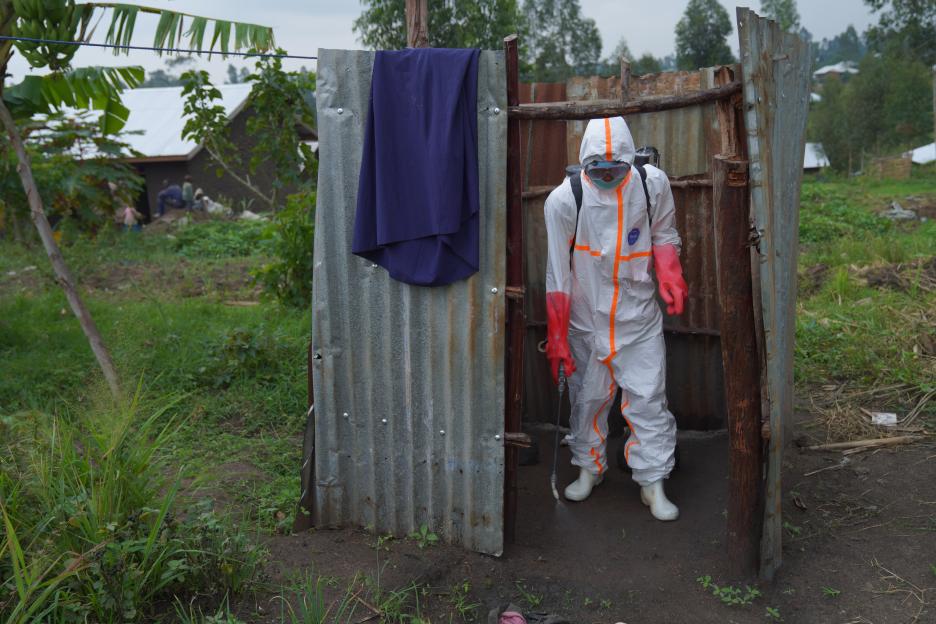 The Ebola outbreak has been described as the fastest spreading on record Credit: AP
Experts believe infections started circulating months before the outbreak was declared on May 15.
As a result, the true number of cases could be much higher than the official tally.
In its latest report, the central African country’s public institute said the total number of confirmed infections had reached 4,053.
Dr Jean Kaseya, director general of the Africa Centres for Disease Control and Prevention (Africa CDC), expressed fears that the virus has mutated, hampering officials’ efforts to stop its spread.
Speaking on Thursday at a press briefing, he said he and the director general of the World Health Organization (WHO), Dr Tedros Adhanom Ghebreyesus, had planned studies “to check if there is no additional issue, or maybe if the virus is not mutating”.
“Because the level of severity of this Bundibugyo outbreak is unprecedented,” he explained.
Bundibugyo is the name of the Ebola strain behind the outbreak. It’s rare and has a mortality rate of 30 to 50 per cent.
At the moment, it has no approved vaccine or treatment.
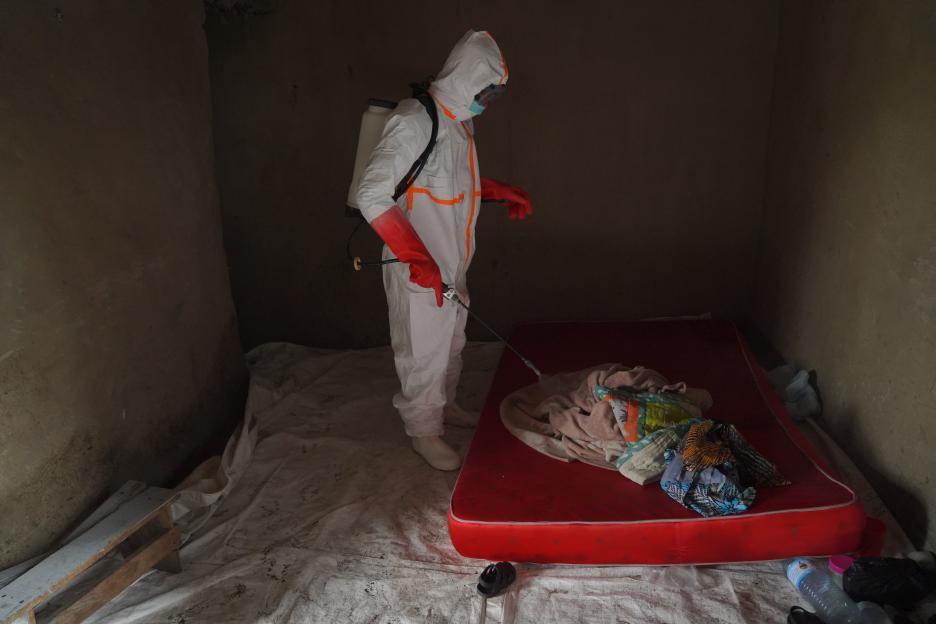 A health worker in the Ituri province, eastern Congo Credit: AP
 How does Ebola spread and what are the symptoms?
The virus is transmitted through direct contact with blood and body fluids and objects that have been contaminated by someone with Ebola.
It also spreads through contact with sick or dead wild animals.
It can take symptoms two to 21 days to appear following infection – this is known as an incubation period.
Ebola first appears as a high fever, intense muscle and joint pain, headaches and a sore throat.
Initial symptoms are often followed by vomiting and diarrhoea, rashes on the skin, kidney and liver failure, and sometimes internal and external bleeding.
People who survive the virus can suffer from arthritis as well as vision and hearing problems.
Some types of Ebola can be prevented with vaccines and treated with medicines.
Source:
Cases have been recorded in the provinces of Ituri, North Kivu, South Kivu, Haut-Uele and Tshopo.
More than two-thirds of Ebola deaths are happening in the community rather than in treatment centers.
In a treatment center run by Médecins Sans Frontières (MSF) in Bunia, the capital of Ituri province, 90 per cent of admitted patients aren’t on authorities’ lists of contacts of known cases.
Both of these factors indicate high levels of untracked transmission, the Guardian reports.
Dr Kaseya said contact tracing in the DRC was insufficient, with only 10 contacts identified for every Ebola patient – when the number should be about 40.
Dr Wessam Mankoula, acting head of emergency preparedness and response at Africa CDC, said response teams planned a shift “from contact tracing to active case search”.
This would mean community health workers “moving from door to door”, asking households if they had anyone sick with Ebola symptoms.
He added: “I think the time for incremental action is over and we’re starting now the phase for scaling up.”
A report published in the journal Science last month concluded that Congo’s outbreak had probably started in January, or even earlier, in Ituri.
Researchers identified more than 500 suspected cases between mid-January and May 15.
But delayed detection, overwhelmed surveillance, military conflict, and a lack of vaccines and treatments for the strain causing the outbreak meant the – and is continuing to outpace officials’ efforts to contain it.
This is the second largest Ebola outbreak recorded.
So far, only West Africa’s 2014-16 outbreak has been bigger, with over 28,000 cases recorded across Guinea, Liberia and Sierra Leone.
Ebola is a viral haemorrhagic fever named after a river in DRC, where it was discovered in 1976.
Scientists believe Ebola originates in fruit bats, which can carry the virus without becoming seriously ill themselves.
Humans are usually infected through contact with infected wild animals — including bats and monkeys — often during hunting, butchering or preparing bushmeat.
The initial symptoms appear suddenly and are flu-like, such as a fever, headache and tiredness.
As the disease progresses, vomiting and diarrhoea develop and the body’s organs do not work as well.
Later, patients can experience failed liver and kidney function and internal bleeding.
Meanwhile, health experts warned last month that Ebola could be .
The of victims’ bodies between different areas of the DRC for funerals or burial risks the virus spreading further, the International Organisation for Migration (IOM) said.
The virus remains highly contagious after death, making practice a critical component of outbreak control.

Eze Chidiebere Paul
I'm dedicated to creating high-quality content that informs, inspires, and delights. If you have any questions or suggestions, don't hesitate to get in touch. Happy reading!